
Searching the Kitty Hawk Court Docket
Kitty Hawk offers no municipal search of its own. State traffic, criminal, and infraction cases from the town run through the North Carolina eCourts Portal. Smart Search there takes a case number. It also accepts a citation number, a party or business name, and other guided fields. A name search can pull too broadly. The Dare location filter narrows it down. The public Case Summary lists the case information and events on file. Remember, though, that the Portal is a convenience and not the clerk's official record.
- Select Smart Search in the Portal for the Kitty Hawk matter.
- Search by citation number, case number, or party name and choose Dare when appropriate.
- Review the Case Summary for the case status, events, public hearings, and disposition information.
- Use Search Hearings or the Dare Criminal Calendar for a current Kitty Hawk hearing.
- Contact the Dare County Clerk of Superior Court for an official copy, terminal access, or a record that is not publicly available online.
An Enterprise Justice number follows a set format: a two-digit year, case-type letters, a six-digit sequence, and a county identifier. A Kitty Hawk citation number is often the easier first key. A name match by itself proves little, so compare the case type, the filing date, and the public case details before you rely on any result.
Kitty Hawk Citation Route to Dare Court
Kitty Hawk police and town departments are local. A state citation never creates a Kitty Hawk court docket, though. The ordinary path starts with a Kitty Hawk Police citation. From there it runs into Dare District Court and the Dare Clerk. Portal adds the public case-search layer. Search Hearings and the Dare calendar supply date tools. A qualifying appeal can climb to Superior Court. It may then reach the North Carolina appellate courts as the law allows.
That structure sorts three common tasks. A town department handles municipal services. A police contact handles local department matters. The Dare Clerk, by contrast, keeps the state court file and answers questions about official copies, permitted payments, and court dates. A Kitty Hawk town page has its value. But it is not the state case register. Never treat it as one.
| Need | Kitty Hawk contact | State-court route |
|---|---|---|
| Town department service | Town Hall | Not a docket matter |
| State ticket or criminal case | Issuing officer or ticket | Portal, Dare calendar, Dare Clerk |
| Official court copy | Not held by Town Hall | Dare County Clerk of Superior Court |
Kitty Hawk Municipal Court Basics
Kitty Hawk runs no separate municipal court or municipal docket. It offers no city citation portal either. The town has an incorporated government. It has its own police. Even so, traffic, criminal, and infraction cases all move through the Dare state-court system. A Kitty Hawk case starts with Portal Smart Search. That gives a public summary. Then turn to Search Hearings or the Dare Criminal Calendars for dates. When those fall short, the Dare Clerk handles court-file help and official copies.
The 2020 Census counted 3,689 residents in Kitty Hawk. A population that size still supports no city court, courtroom, or municipal caseload. That absence matters. An online town transaction, a town phone call, or a Town Hall screen cannot replace a public Dare case lookup. The Town of Kitty Hawk source shows the official Town Hall contact details.
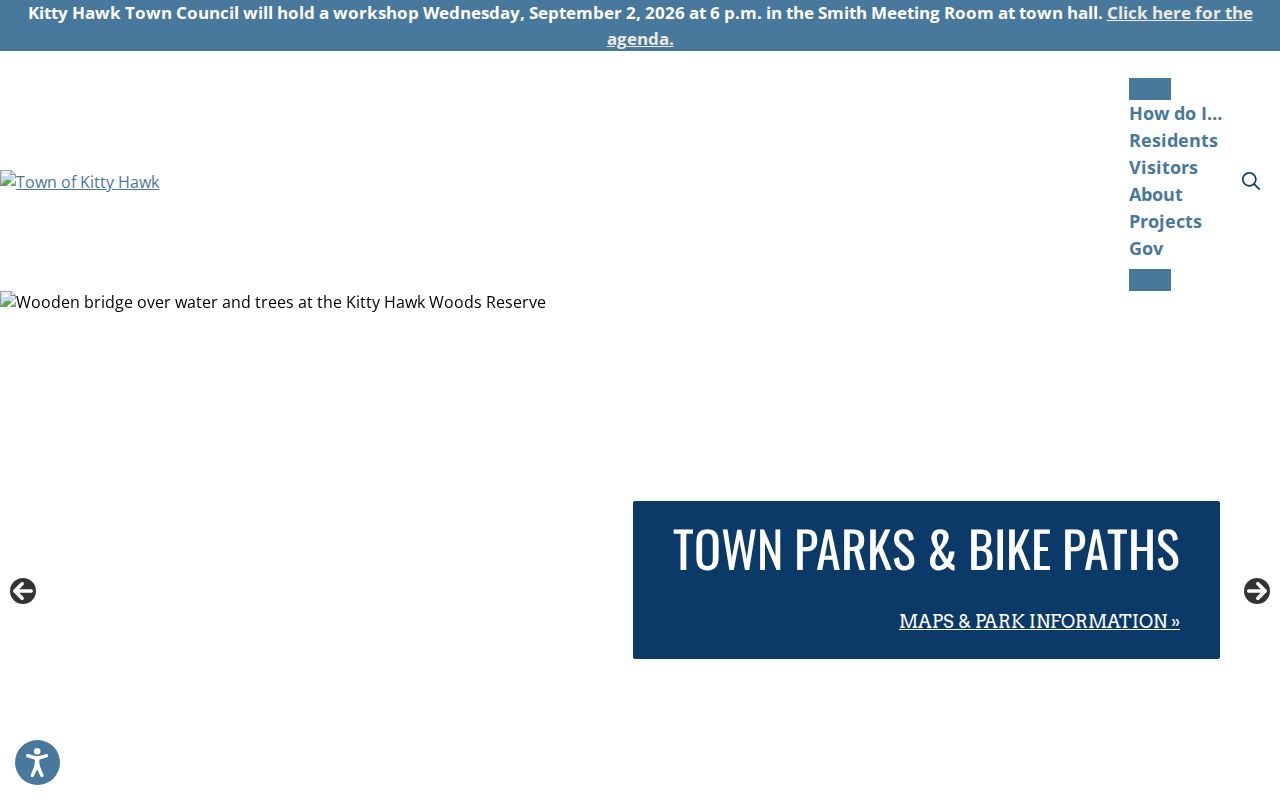
Town Hall marks the municipal seat of government. A Kitty Hawk court docket, though, lives in Dare's state court channels.
Kitty Hawk Town Hall and Court Clerk
Kitty Hawk Town Hall sits at 101 Veterans Memorial Drive, Kitty Hawk, NC 27949. The main number is (252) 261-3552, and stated office hours run Monday through Friday, 8:30 a.m. to 5 p.m. Those details serve questions about town government. Town Hall is not a court filing counter. It cannot certify a Kitty Hawk court record.
Court matters belong with the Dare Clerk. The number is (252) 475-5200. That office keeps Dare District and Superior Court records, covering traffic, criminal, civil, estate, and special-proceeding files. The two offices serve different public functions. Calling the town for a court date only delays the search. The date lives in the state record, not a municipal contact directory.
Note: a municipal website can be the right source for town services. It can still be the wrong source for a Kitty Hawk court docket.
Court Dates and Settings in Kitty Hawk
Every Kitty Hawk court date is a Dare court setting. Open the case's Portal Case Summary first. Then use Search Hearings for current setting information. The Civil and Criminal Calendars site publishes Dare session documents too. Pick Dare and Criminal for a traffic or criminal matter. Then confirm the court level and date. A calendar works well as a confirmation layer. When a setting changes close to the session, though, the clerk is the direct fallback.
| Date | The Dare setting date shown in the ticket, Case Summary, or court calendar. |
|---|---|
| Time | The court session or individual hearing time, subject to court changes. |
| Courtroom | The Dare courtroom in the hearing search or published session document when available. |
| Judicial officer | The listed judge or hearing official, when the public result displays one. |
| Setting type | A hearing, arraignment, pretrial event, trial, compliance event, or disposition. |
A Kitty Hawk town meeting schedule is not a court calendar. If a date is missing from a PDF, check Portal and Search Hearings before assuming the case has ended. For a single case, the Case Summary's event list gives the better chronology.
Kitty Hawk Hearing Lookup
The Portal's Search Hearings screen exists for one job: current court settings. It accepts a case number, party or business name, attorney bar number, judicial officer, or courtroom. Results there differ from what the broader Smart Search case page shows. For a Kitty Hawk docket search, the Dare calendar adds the public session document. That document splits Dare District and Superior settings apart. No separate city court calendar exists. Work from a citation or case number first. Then check the Portal case page. Finally confirm the hearing against the calendar. Name searches help when the number is unknown, but they can pull in unrelated people, so keep the citation and Portal number handy when asking the clerk to confirm the setting.
Docket flow: Kitty Hawk Police citation → Dare District Court / Dare County Clerk → Portal Case Summary and Dare calendar → Superior Court on qualifying appeal.
Traffic Tickets in Kitty Hawk
A Kitty Hawk traffic ticket belongs to Dare state court, not a city tribunal. The ticket shows the court date. It may also carry the citation number for Portal. If no appearance is required, the offense may qualify for pre-date payment. Paying counts as appearing and pleading guilty to the original charge. When a citation requires an appearance, only the court can resolve it.
Dare lists three payment routes. Card payment runs through Portal, with a vendor charge added. Or pay at the clerk's office no later than the court date. The third option is a cashier's check. A money order by mail also works. Personal checks are not accepted there. The clerk cannot amend or reduce a Kitty Hawk citation. The county's Traffic Tickets page carries the full Dare payment and date context.
Miss a required date. The case may then be marked called and failed. After 20 days, an FTA can issue and court notices may follow. Dare's current table lists a $200 failure-to-appear fee and a $50 failure-to-comply fee. Those amounts follow the state court ticket route. They do not touch ordinary Kitty Hawk municipal service.
Kitty Hawk Citation Payment Route
Kitty Hawk offers no city portal for paying a state citation. Start with the ticket. Its appearance instruction and court date decide everything. Payment-eligible matters go through the state Portal, the clerk counter, or the mail route Dare has set out. Never mail payment to Town Hall. The ticket came from Kitty Hawk, but the debt runs to state court.
The docket angle matters too. Every state payment, appearance, and disposition lands in the court's Case Summary and the clerk file. A town payment page covers fees or local services. It is not proof that a state case was paid or resolved. Follow the ticket's instruction, since payment eligibility varies by charge.
Where Kitty Hawk Cases Go
Kitty Hawk state cases start in Dare District Court. That division hears traffic infractions, misdemeanors, family cases, and civil matters of $25,000 or less. Superior Court takes the heavier work: felonies, civil claims above that threshold, and qualifying appeals. One clerk serves both trial divisions. The Dare County Clerk of Superior Court sits at the Justice Center. Kitty Hawk Town Hall holds none of the docket.
Docket flow: Kitty Hawk Police or citation → Dare District Court and Dare Clerk → Superior Court for the applicable case type or appeal → North Carolina Court of Appeals where allowed.
The public Portal is usually the first stop for a Kitty Hawk docket search. Older cases, limited access, or the need for a court-issued copy point elsewhere. The clerk's public terminals and paper files cover that ground. A city portal cannot help here. Kitty Hawk keeps no municipal docket. Town hall has none of its own to search.
Kitty Hawk Police Records and Court Cases
A Kitty Hawk police record is not a court record. The police file covers a department report or local enforcement activity. The court case is a different animal. It lives in the Dare court docket the clerk holds. Portal can display public court information such as events, hearings, disposition, and public financial entries. It will not produce the underlying police report or a certified court copy. For those, ask the clerk directly.
- Case Summary
- The Portal’s public record view for a qualifying court case, including the event history.
- Search Hearings
- The Portal tool for current hearing information rather than the full case history.
- Certified copy
- A clerk-provided authenticated court document, not a Portal printout.
When a public document link fails because the file is too large, state guidance says to ask the clerk whether it can be split. Sealed and confidential records stay outside public Portal access. So pick the source by what you actually need. A Kitty Hawk police record and a Dare court file come from different offices.
Kitty Hawk Court Record Access Rules
Kitty Hawk court records are Dare court records. That is North Carolina law. G.S. 7A-109 has the clerk maintain records, files, dockets, and indexes, and it generally allows public inspection where no law restricts it. The public Portal is the remote access path, and the Dare Clerk handles local inspection and court-copy questions.
North Carolina access rules:
G.S. 132-1 defines public records and establishes the minimal-cost policy for copies unless another law controls.
G.S. 15A-151 makes expunction files confidential with limited legal exceptions.
G.S. 15A-146 provides for expunction in eligible dismissed or not-guilty matters.
Public inspection has limits. Juvenile records, sealed files, confidential material, and expunction information follow separate rules. Bring the Kitty Hawk case number and ask which route applies.
Kitty Hawk Docket Public Access
Two statutes frame public access to a Kitty Hawk court docket. G.S. 132-1 covers North Carolina public records in general. G.S. 7A-109 covers the clerk's records, dockets, and inspection authority. Neither points to a town-government portal. Both route a court-record searcher to the Dare Clerk and authorized eCourts access instead.
The G.S. 132-1 source sets out the state's public-record definition and the cost policy for copies.
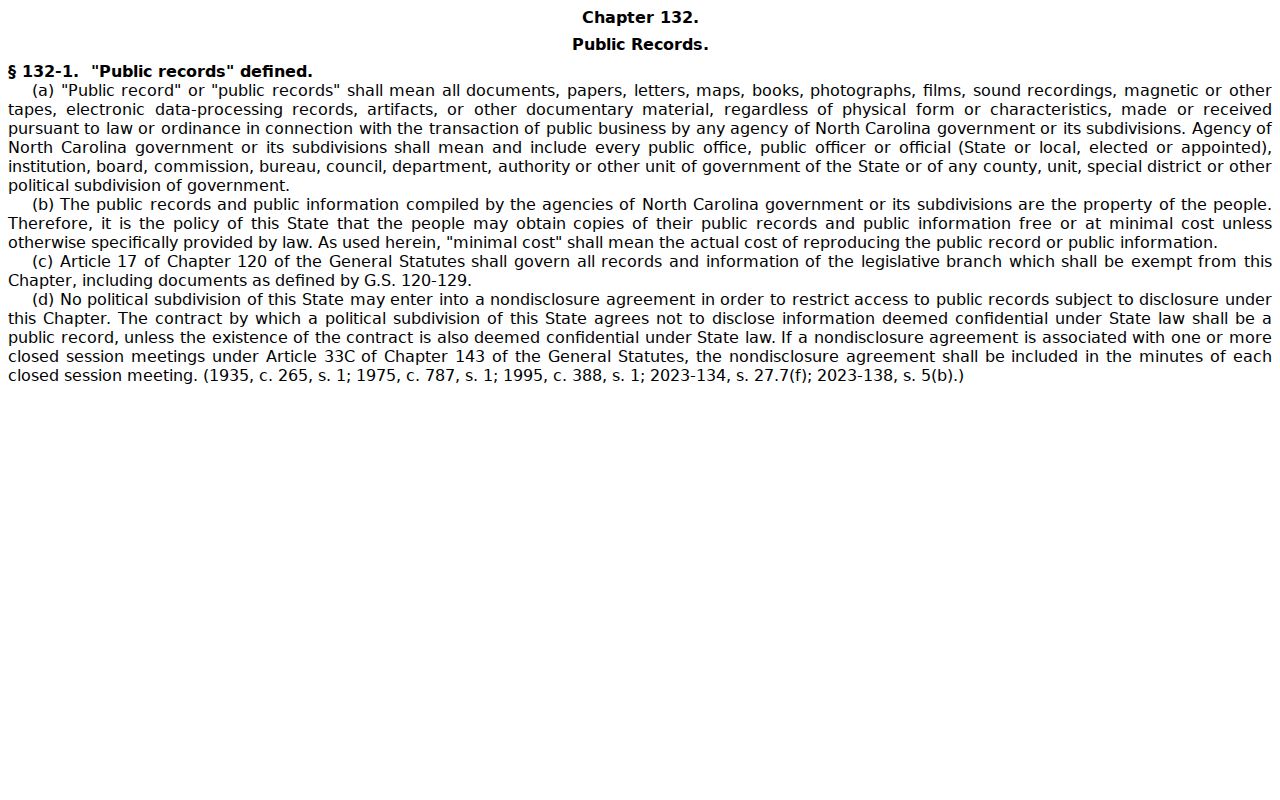
The statute backs up the public-record rule for the Kitty Hawk docket. It does not set up a separate records office inside town hall. No extra stop exists. The G.S. 7A-109 source spells out the clerk's role in keeping the docket and court records.
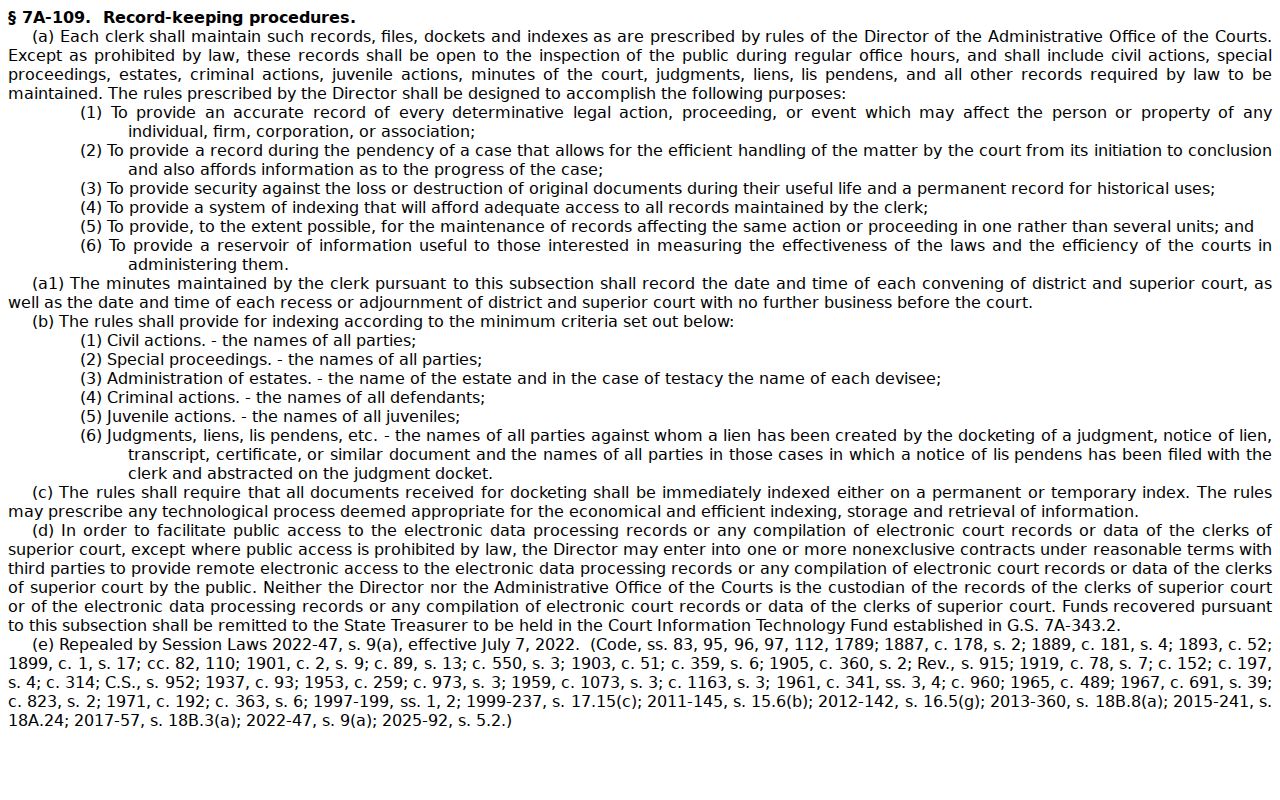
That page confirms the point: the Dare County Clerk of Superior Court, not Kitty Hawk town government, keeps the state court docket.